Vibrato and the Flute: An Additive to Tone, and a Bridge Between Colors
Updated: Mar 9
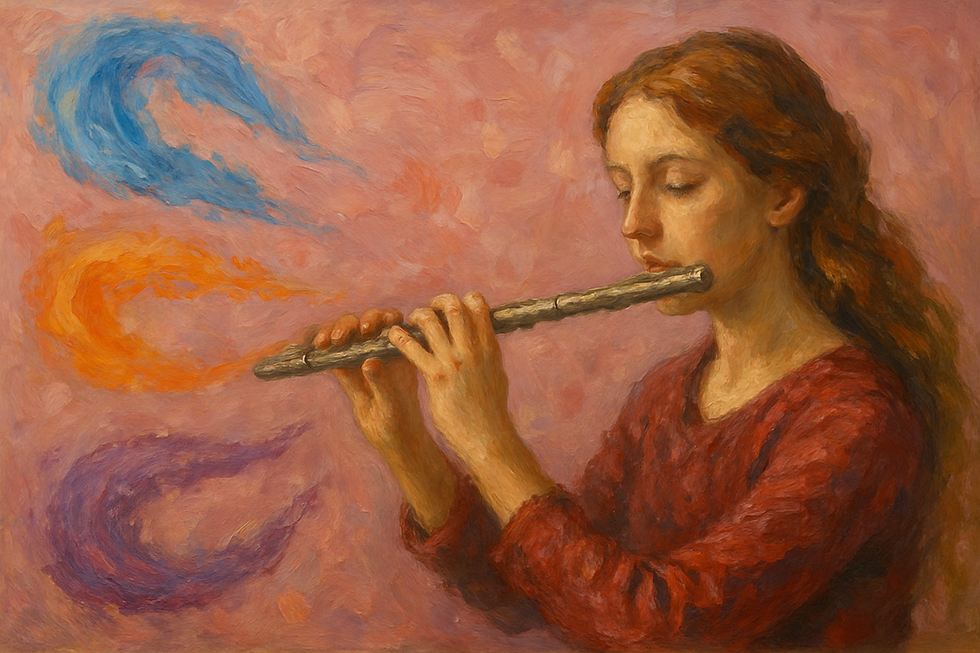
Vibrato is one of the most powerful tools in a flutist’s arsenal, capable of transforming tone colors and bridging emotional landscapes within a performance. By varying the speed, depth, and intensity of vibrato, flutists can seamlessly transition between tone colors, such as pink to orange, pink to blue, orange to black, or pink to purple, creating a dynamic and expressive musical journey. Understanding how vibrato interacts with tone colors is essential for making critical artistic decisions that elevate your playing.
Vibrato as an Additive to Tone Colors
Vibrato enhances tone colors by adding depth, richness, and movement to the sound. For example:
A slow, gentle vibrato can soften a "pink" tone, emphasizing its tenderness and innocence.
A wider, slower vibrato can warm up a "orange" tone, evoking comfort and relaxation.
A fast, narrow vibrato can sharpen a "blue" tone, adding a sense of coldness or introspection.
The key is to use vibrato tastefully, ensuring it complements the tone color rather than overwhelming it. Vibrato should blend seamlessly into the sound, acting as a subtle enhancement rather than a distraction.
Vibrato as a Bridge Between Tone Colors
One of vibrato’s most fascinating roles is its ability to act as a bridge between tone colors, allowing flutists to transition smoothly from one emotional state to another. Consider the following examples:
Pink to Orange: Start with a soft, airy "pink" tone and gradually widen the vibrato to introduce warmth, transitioning into a vibrant "orange" tone. This shift can symbolize a journey from innocence to comfort.
Pink to Blue: Begin with a hollow "pink" tone and add a faster vibrato to create a shivering effect, transitioning into a "blue" tone that conveys introspection or loneliness.
Orange to Black: Use a slow vibrato to deepen an "orange" tone, then narrow and intensify the vibrato to transition into a dramatic "black" tone, representing power or despair.
Pink to Purple: Start with a gentle "pink" tone and gradually add complexity to the vibrato, introducing a mysterious "purple" tone that blends warmth with intrigue.
These transitions can occur over a single note, a phrase, or an entire passage, depending on the emotional narrative of the music.
Making Critical Decisions
The use of vibrato in tone color transitions requires careful planning and artistic intuition. Here are some tips for making critical decisions:
Understand the Emotional Context: Consider the mood and story of the piece. What emotions are you trying to convey? Let this guide your vibrato choices.
Experiment with Vibrato Speeds: Practice varying the speed and depth of your vibrato to discover how it interacts with different tone colors.
Plan Transitions: Mark tone color changes in your score and decide how vibrato will facilitate these transitions. For example, a passage marked "blue" might benefit from a faster vibrato, while a "orange" section might require a slower, broader vibrato.
Record and Reflect: Record your practice sessions and listen critically to your vibrato usage. Are the transitions smooth? Does the vibrato enhance the tone colors?
Conclusion
Vibrato is not just an embellishment—it is a vital tool for shaping tone colors and creating emotional depth in your playing. By mastering vibrato as both an additive and a bridge, flutists can unlock new dimensions of expression, guiding their audience through a rich tapestry of emotions.
Making critical decisions about vibrato requires a balance of technical skill, artistic intuition, and emotional awareness. With practice and experimentation, you can use vibrato to transform your tone colors and bring your music to life in ways that resonate deeply with your listeners.


Comments